The Barrier Most Crypto Platforms Create — And Why It Doesn't Have to Exist
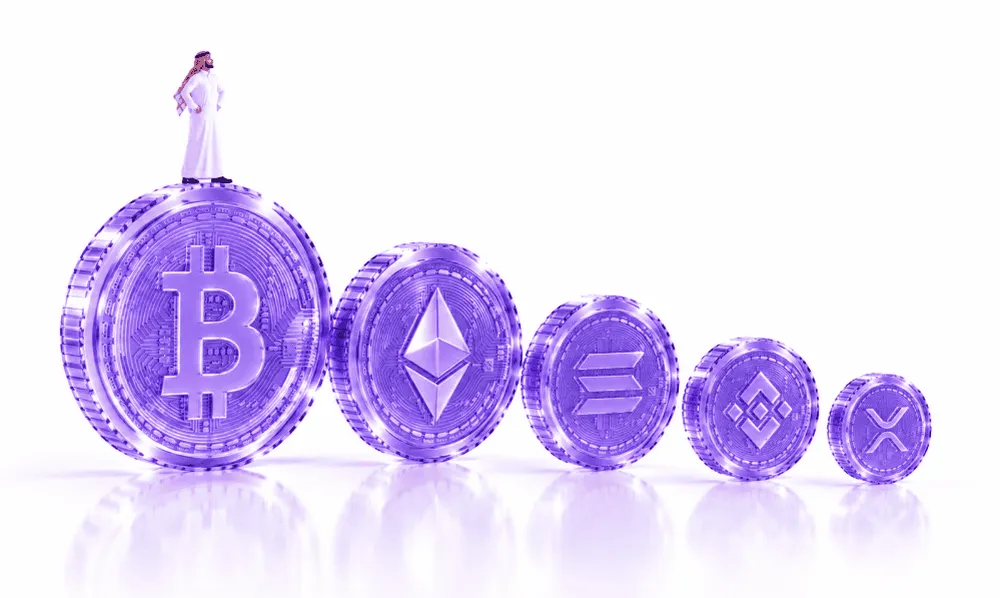
Crypto currencies have been fully integrated into the finance industry. The price of Bitcoin peaked in 2025 and many more people, banks, and funds started buying Bitcoin after they received their approval to open trading accounts.
Many sovereign investors from Saudi Arabia and other countries in the Gulf Cooperation Council (GCC) continue to want to educate themselves about purchasing cryptocurrencies, but have a difficult time locating a platform on which to cash to be "fiat" money and then buying cryptos because all of these platforms have multiple pieces, e.g., different wallets, fee structures, etc., that keep making it difficult for them to complete the transactions.
The result is that a significant number of GCC investors who would otherwise include crypto in a diversified portfolio have simply avoided the category, not because of a view on the asset itself, but because the experience of accessing it has been designed poorly. This article addresses that problem directly: how to access crypto trading without the complexity and without the hidden fees that have defined so much of the category.
Related: Stocks AND Crypto in One App: Which GCC Platforms Support Both?
What 'Hidden Fees' Actually Means in Crypto Trading
Hidden fees in cryptocurrency trading take several distinct forms that most retail investors encounter without fully understanding their cost impact:
Spread markup: The most common hidden cost. A platform quotes you a buy price and a sell price, the difference between them is the spread. On major platforms, this spread can be 0.5% to 1.5% of the transaction value, meaning you immediately lose 0.5% to 1.5% simply by entering a trade. This cost is never displayed as a 'fee' but is built into the price you are shown.
Network/gas fees: Blockchain transaction fees that apply when moving crypto on-chain. These fluctuate with network congestion and can be significant for smaller transactions, especially on Ethereum.
Withdrawal fees: Many platforms charge a flat or percentage fee to withdraw crypto to a personal wallet or to convert back to fiat currency.
Conversion fees: If you deposit in SAR and the platform holds USD, the currency conversion itself carries a hidden spread of 1% to 3% on many platforms.
Inactivity fees: Some platforms charge monthly fees if you do not trade within a specified period.
The total of these costs, spread + withdrawal + conversion + any subscription can easily amount to 3% to 6% of a transaction's value on platforms that obscure their pricing. At Raseed, the fee structure is clear across asset classes. US stocks and ETFs are charged at 0.5% per transaction, with a minimum fee of $0.50 and a maximum cap of $3 per trade, while cryptocurrency trades are charged at 0.5% of the total transaction value. There are no inactivity fees, no hidden conversion charges, and no subscription requirements.
Related: Hidden Fees in Stock Trading Apps
Related: How Much Does It Cost to Trade US Stocks from Saudi Arabia?
Stocks and Crypto in One Place: The Single-App Advantage
One of the most significant sources of complexity for GCC investors who want both stocks and crypto exposure is managing multiple platforms simultaneously, one for US stocks, another for ETFs, a third for crypto. This creates unnecessary operational burden: multiple onboarding processes, multiple funding and withdrawal procedures, multiple KYC verifications, and multiple fee structures to track.
The ability to access stocks, ETFs, and crypto through a single regulated platform eliminates this complexity entirely. Your portfolio is visible in one place, your funds are managed through a single process, and your trading history for tax and personal record purposes — is consolidated in one account.
Related: Best Stock and Crypto Trading App in GCC: Full Comparison 2026
What to Look for in a Crypto Trading Platform as a Saudi Investor
Before selecting any platform for crypto trading, Saudi and GCC investors should evaluate the following criteria:
- Regulation: Is the platform regulated by a recognised financial authority? Raseed's brokerage services are provided through Fullerverse (SC) Limited, licensed and regulated by the Financial Services Authority Seychelles (Licence No. SD152).
- Fee transparency: Are all fees displayed clearly before you confirm a transaction? A platform that cannot show you total costs before execution is hiding something.
- Asset availability: Does the platform offer the specific cryptocurrencies you want to trade? Bitcoin and Ethereum are the baseline; leading platforms include a curated selection of established cryptocurrencies.
- Fund security: How are user funds held? Are they segregated? What happens in the event of a platform failure?
- Interface quality: Is the platform genuinely easy to use, or does it require technical knowledge to navigate?
- Customer support: Is support available in your timezone and language?
Related: Is Raseed Safe? Regulation, Security & Fund Protection
Related: Why Your Money Is Secure on Raseed Platform
Common Misconceptions About Crypto Trading That Create Unnecessary Complexity
Misconception 1 — You need a separate crypto wallet: On a regulated trading platform, you do not need to manage private keys, seed phrases, or hardware wallets to trade crypto. Your exposure is managed through the platform, exactly as your stock holdings are.
Misconception 2 — You need to buy a whole Bitcoin: You can buy fractional amounts of Bitcoin or Ethereum starting from as little as $1 equivalent. You do not need to purchase a whole coin.
Misconception 3 — Crypto trading requires understanding blockchain technology: You do not need to understand how proof-of-work or smart contracts function to trade Bitcoin or Ethereum as financial assets. You need to understand price behaviour, risk management, and your own objectives — the same skills that apply to stock trading.
Misconception 4 — All crypto exchanges are identical — Not at all. There is a massive difference in regulations, fees, assets, security practices, and interfaces. Using a regulated and transparent platform with capped fees and segregated client funds is a world apart from an unregulated exchange.
Frequently Asked Questions: Crypto Trading Without Complexity
Disclaimer
This article is for educational and informational purposes only. It is not investment advice, nor a recommendation, offer or solicitation to buy or sell any security or digital asset. Investing involves risk, including possible loss of principal. Past performance does not guarantee future results.
Securities brokerage services are provided by Fullerverse (SC) Limited, a securities broker-dealer licensed and regulated by the Financial Services Authority of Seychelles (Licence No. SD152). Fullerverse (SC) Limited is a wholly-owned subsidiary of Raseed Invest Inc. Registered address: House of Francis, Room 302, Ile Du Port, Mahe, Seychelles.
Cryptocurrency services are made available by Raseed Crypto LLC ("Raseed Crypto"), a FinCEN-registered money services business (MSB Registration No. 31000316890439) and a wholly-owned subsidiary of Raseed Invest Inc. Cryptocurrencies are not stocks and your cryptocurrency investments are not protected by either FDIC or SIPC. Cryptocurrency is highly speculative in nature and involves a high degree of risk, including volatile market price swings, market manipulation, flash crashes and cybersecurity risks. Cryptocurrency regulations are continuously evolving, and it is your responsibility to understand and abide by them. Cryptocurrency trading can lead to large, immediate and permanent loss of financial value. You should have appropriate knowledge and experience before engaging in cryptocurrency trading. For additional information, please see our Crypto Risk Disclosures (https://files.raseedcapital.com/disclosures/library/CryptoRiskDisclosures.pdf).
Cryptocurrency services are not offered by, and are not available through, Raseed Invest Limited, which is regulated by the Dubai Financial Services Authority. Products and services referenced in this article are not available in all jurisdictions and are not directed at any person in a jurisdiction where their offer or availability would be contrary to local law or regulation.